Your Cart is Empty


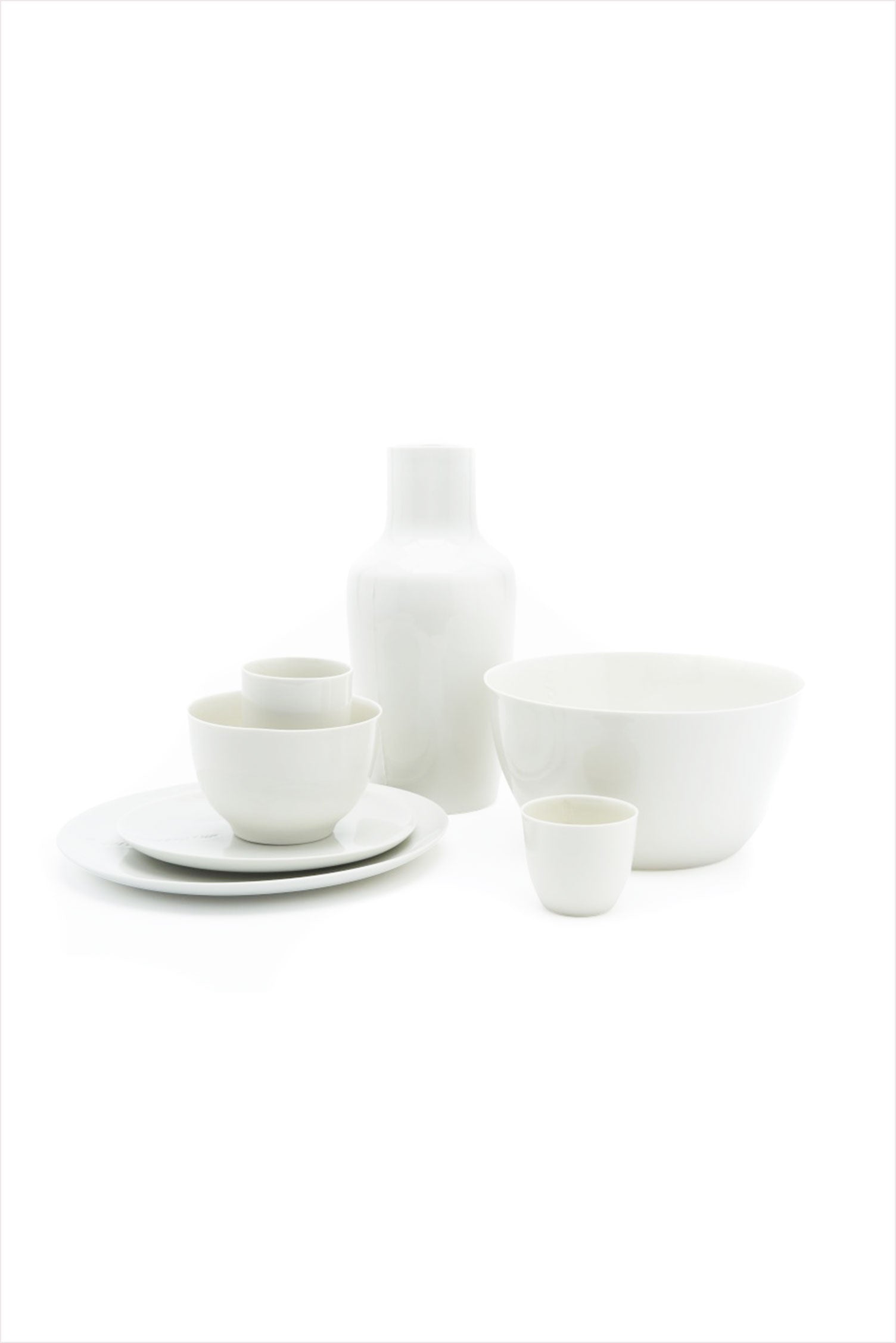
The B-set is conspicuous for plates that can barely be stacked orderly, dishes that are not quite circular, and mugs of varying thickness. Slight deviations come unavoidable with the deliberately chosen production process. Each piece is fired in an overheated kiln to slightly warp the porcelain into uniquely distorted shapes and coincidental material effects. The imperfections give each piece of this dinnerware a unique character. The B-set by Hella Jongerius is generally considered to be an icon in the history of Dutch design
In an industry where, since industrialization, perfection has become the norm, in this design, Hella Jongerius focuses on the concept of 'imperfection'. She studied the possibilities of restoring individuality to the serial production process, an important recurring theme in her work. During a period she spent working at the European Ceramics Work Centre in ‘s Hertogenbosch (1997) she experimented with clay by firing it at a high temperature, which distorted each piece. This is how she developed the method for producing the B-Set, in which each piece acquires its own unique character and regains its individuality.